Best Bench Styles for Modern Luxury Interiors

A bench in a modern interior is more than extra seating. Its shape, height, material, and placement can change the visual balance of the entire room. For example, a slim backless bench at the foot of a bed can define the width of the sleeping area without blocking sightlines, while a bulky bench with a solid base may make the same room feel heavier and more crowded. In spaces dominated by straight lines, wall panels, and angular furniture, a curved bench can soften the geometry and create a smoother visual flow.
Upholstery also affects more than appearance. Bouclé adds visible texture and softness, velvet creates a richer and more formal finish, while leather usually gives the bench a cleaner, more structured look. The base matters too: slim legs expose more floor and make the piece feel lighter, whereas solid or thick bases give it stronger visual weight.
Choosing the best bench styles for modern interiors therefore comes down to three factors: the size of the space, the function of the bench, and how much visual attention it should attract. The following sections compare the most suitable styles for bedrooms, entryways, living rooms, and other luxury interiors, with practical guidance on where each works best.
Key Elements of a Modern Luxury Bench
A modern luxury bench usually looks refined because of its proportions, material quality, and restraint not because it has more decoration. The seat height should feel comfortable without competing with nearby furniture, while the length and depth need to match the scale of the room. A bench that is too deep can restrict movement, and one that is too short may look visually disconnected from a large bed or wall.
Material transitions also matter. Clean upholstery edges, well-finished seams, balanced cushioning, and a base that feels proportionate to the seat can make a simple bench look more expensive. Slim metal or timber legs create a lighter appearance, while solid bases make the piece feel more architectural and visually dominant.
In modern luxury interiors, the strongest designs often use one or two materials well rather than combining several decorative details. Texture, craftsmanship, and proportion usually create a more sophisticated result than excessive ornament.

Upholstered Benches for Soft, Refined Interiors
Upholstered benches work especially well in bedrooms, dressing areas, and formal living spaces because they add comfort without introducing another visually heavy furniture piece. The upholstery softens hard surfaces such as stone, wood, metal, or wall panelling and can make a structured room feel more balanced.
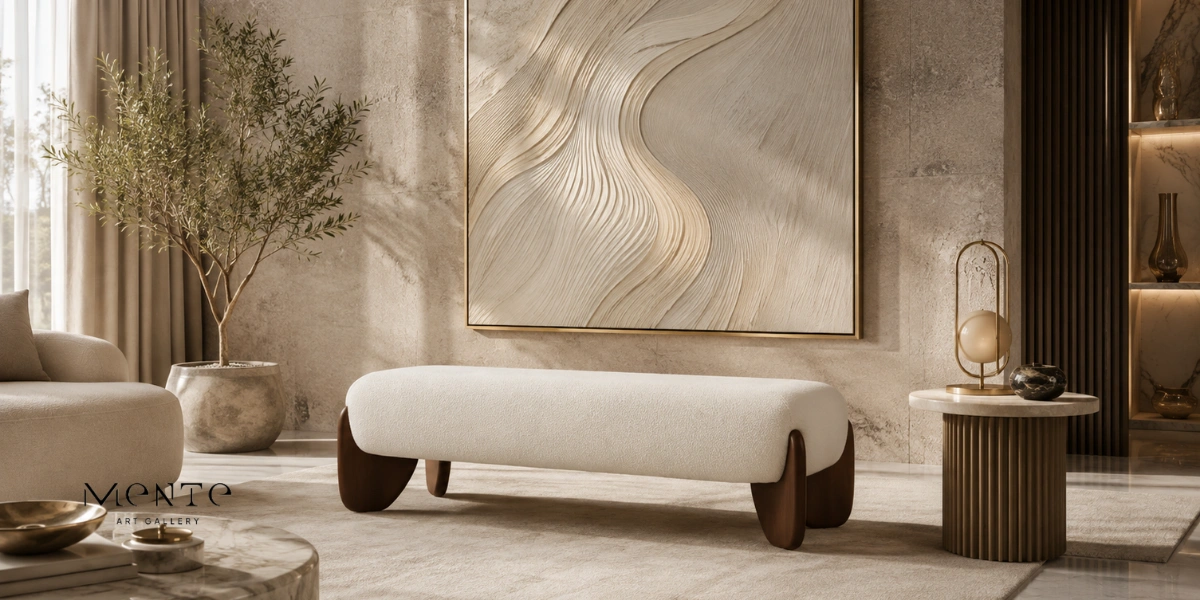
A fully upholstered bench creates a stronger, more grounded look because the seat and base read as one solid form. This works well in larger rooms or at the end of a substantial bed, but in compact spaces it can feel too bulky. A bench with slim visible legs has the opposite effect: more floor remains visible, so the piece feels lighter and easier to place in smaller interiors.
Fabric choice changes the result as well. Bouclé adds texture and softness, velvet creates a richer and more formal appearance, while tightly woven fabrics usually give a cleaner and more practical finish for frequent use.
Curved and Sculptural Bench Styles
Curved benches are useful when an interior feels dominated by straight lines. In rooms with rectangular beds, wall panels, cabinets, or linear sofas, a rounded bench can break the geometry and make the space feel less rigid. The effect is especially noticeable when the curve is visible from more than one angle, such as in an open bedroom or living area.
Sculptural benches go a step further by acting as a visual feature rather than only extra seating. They work best when the surrounding furniture is relatively restrained. If the room already has a bold sofa, statement lighting, or a heavily patterned rug, adding another highly expressive bench can make the composition feel crowded. This is also worth considering when you buy sofa and seating in Dubai, as the bench should complement the main seating rather than compete with it. Scale is important with curved designs. Deep curves and oversized bases need more clearance around them, so they suit larger rooms better. In tighter spaces, a shallow rounded edge or softly curved seat can create the same visual softness without reducing circulation space.
Minimal Backless Benches
Backless benches are a strong choice when you want extra seating without visually closing the room. Because there is no backrest, the eye can travel across the space more easily, which helps bedrooms, hallways, and open-plan areas feel less crowded.
They work especially well at the foot of a bed, where the bench should support the composition without competing with the headboard. In narrow spaces, a shallow backless design also reduces the chance of blocking circulation. The main consideration is proportion. A very long bench can overwhelm a compact room, while a very short one may look disconnected from a large bed or wall. In most modern interiors, a simple upholstered seat with slim legs or a clean solid base creates the most balanced result.
| Situation | Best Choice | Avoid |
|---|---|---|
| Minimal bedroom | Slim upholstered bench | Bulky solid base |
| Large luxury bedroom | Curved or sculptural bench | Very small bench |
| Narrow entryway | Shallow backless bench | Deep seating |
| Formal living room | Statement upholstered bench | Utility-style bench |
| Dressing area | Compact cushioned bench | Oversized design |
Common Bench Styling Mistakes
A bench can look expensive on its own but still feel wrong in the room if its proportions are off. Avoid choosing a bench that is almost as wide as the bed, too deep for the walkway, or visually heavier than the main furniture. Another common mistake is repeating the exact same fabric and color used on the sofa or bed, which can make the interior feel flat rather than coordinated.
When you buy furniture in Dubai, it is worth considering how each piece works within the full room rather than judging it in isolation. Also consider focal points. If the room already has bold lighting, a sculptural sofa, or a dramatic wall treatment, the bench should usually be quieter.
What Matters Most Before You Choose
- Check the scale: The bench should feel proportionate to the bed, sofa, wall, or surrounding furniture.
- Keep circulation clear: Avoid designs that are too deep or wide for the available walkway.
- Define the function: Decide whether the bench is mainly for seating, dressing, storage, or visual balance.
- Control visual weight: Slim legs and lighter forms suit smaller rooms, while solid or sculptural bases work better in larger spaces.
- Choose materials strategically: Upholstery, texture, and base materials should complement the room without repeating every finish already used.
- Match the statement level: In a visually busy room, keep the bench simple. In a restrained interior, a curved or sculptural design can become the focal point.
Conclusion
The best bench styles for modern interiors are defined by proportion, placement, and material rather than decoration alone. A well-chosen bench should improve how the room functions while adding the right amount of texture and visual weight. When those elements are balanced, even a simple bench can feel intentional and luxurious.
MODERN BENCH GUIDE
Frequently Asked Questions
Practical answers to common questions about choosing, sizing and styling benches for modern luxury interiors.
What type of bench works best in a modern luxury interior?
Upholstered, curved and clean-lined backless benches usually work best. The strongest choice depends on the room size, surrounding furniture and how visually prominent you want the bench to be.
How wide should a bench be at the end of a bed?
The bench should generally be noticeably narrower than the bed so that it feels proportionate without extending beyond the mattress. Leaving visible space on both sides usually creates a cleaner composition.
Are curved benches suitable for small rooms?
Yes, but choose a shallow curve rather than an oversized sculptural form. Soft rounded edges can reduce visual rigidity without taking up excessive circulation space.
Which upholstery works best for a luxury bench?
Bouclé creates texture and softness, velvet gives a richer formal appearance, and leather produces a cleaner, more structured look. For frequent use, durability and stain resistance should also influence the choice.
Should a bench match the sofa or bed exactly?
Not necessarily. Repeating the exact fabric and colour can make the room feel flat. A complementary texture, tone or material often creates a more layered and considered interior.

We are the Mente Art Gallery Team, a group of art, design, and luxury décor specialists focused on the world of original artworks, collectible pieces, and refined interior objects. At Mente Art Gallery, we create clear, tasteful, and thoughtfully curated content to help collectors, interior designers, and luxury buyers discover meaningful pieces with confidence.
Our content covers original paintings, sculptural objects, decorative accessories, statement furniture, and exclusive design pieces, with a focus on artistic value, visual character, and how each piece can elevate a refined living or commercial space.