Start With Furniture
Use the sofa, bed, dining table, console, or cabinet as the first reference for artwork size and placement.


How to choose art for your home starts with one simple question: what already gives the room its character? Before looking at paintings, sculptures, wall pieces, or decorative objects, look at the main furniture in the space. The sofa, bed, dining table, console, cabinet, or armchair usually tells you more than the empty wall does. Its color, size, material, shape, and visual weight should guide the artwork you choose.
A common mistake is choosing art only because it looks beautiful on its own. A piece may be impressive in a gallery, but still feel disconnected once it is placed above a sofa, beside a cabinet, or across from a textured headboard. Good art selection is not about matching everything perfectly. It is about creating a relationship between the artwork and the room.
For a calm modern interior, artwork with clean composition, balanced color, and enough breathing space often works better than a busy piece. For a warmer classic room, textured art, softer tones, or sculptural details can feel more natural. In a bold interior, art may either support the existing drama or create a quiet pause.
The goal is to make the room feel intentional. When the furniture, colors, materials, and artwork speak the same visual language, the space feels complete without looking forced.
Choosing art for your home becomes easier when the room is treated as one complete composition. Before selecting a painting, sculpture, or wall piece, look at the main furniture, interior style, material palette, lighting, wall size, and daily mood. The right artwork should not only look beautiful on its own. It should make the sofa, bed, console, cabinet, or dining area feel more balanced, more personal, and more complete.

Use the sofa, bed, dining table, console, or cabinet as the first reference for artwork size and placement.
Modern, classic, minimal, or warm interiors each need a different artwork mood, rhythm, and visual language.
A small piece can disappear above wide furniture, while an oversized artwork can feel visually heavy.
Wood, marble, metal, velvet, linen, glass, and leather all influence what kind of artwork feels right.
Warm colors often suit wood, brass, and ceramic, while cool tones work well with marble, chrome, and glass.
The best artwork should feel right in daylight, evening light, quiet moments, and when people enter the room.
After you understand the role of the main furniture piece, the next step in choosing art for your home is reading the interior style of the room with more attention. Interior style is not only a label such as modern, classic, minimal, or contemporary. It is created by the colors, furniture shapes, materials, lighting, and empty space working together.
Start with the color palette. If the sofa, rug, curtains, and walls are mostly neutral, the artwork can add depth, contrast, or a controlled touch of color. If the furniture already has strong colors or patterns, a calmer artwork may help the room feel more balanced instead of crowded.
Furniture shape also matters. A room with straight lines, slim legs, glass, metal, or marble usually works better with clean composition, abstract forms, or sharper visual structure. A room with curved furniture, warm wood, soft fabrics, or classic details may feel more natural with textured art, softer movement, or warmer tones.
Materials are just as important as color. A velvet sofa, a wooden cabinet, a stone coffee table, and a metal console each create a different mood. The artwork should respond to that mood, not fight against it.
For example, a cream living room with a wooden coffee table may feel more complete with warm, textured artwork. A darker room with marble and metal can often carry a stronger abstract piece with contrast and movement.
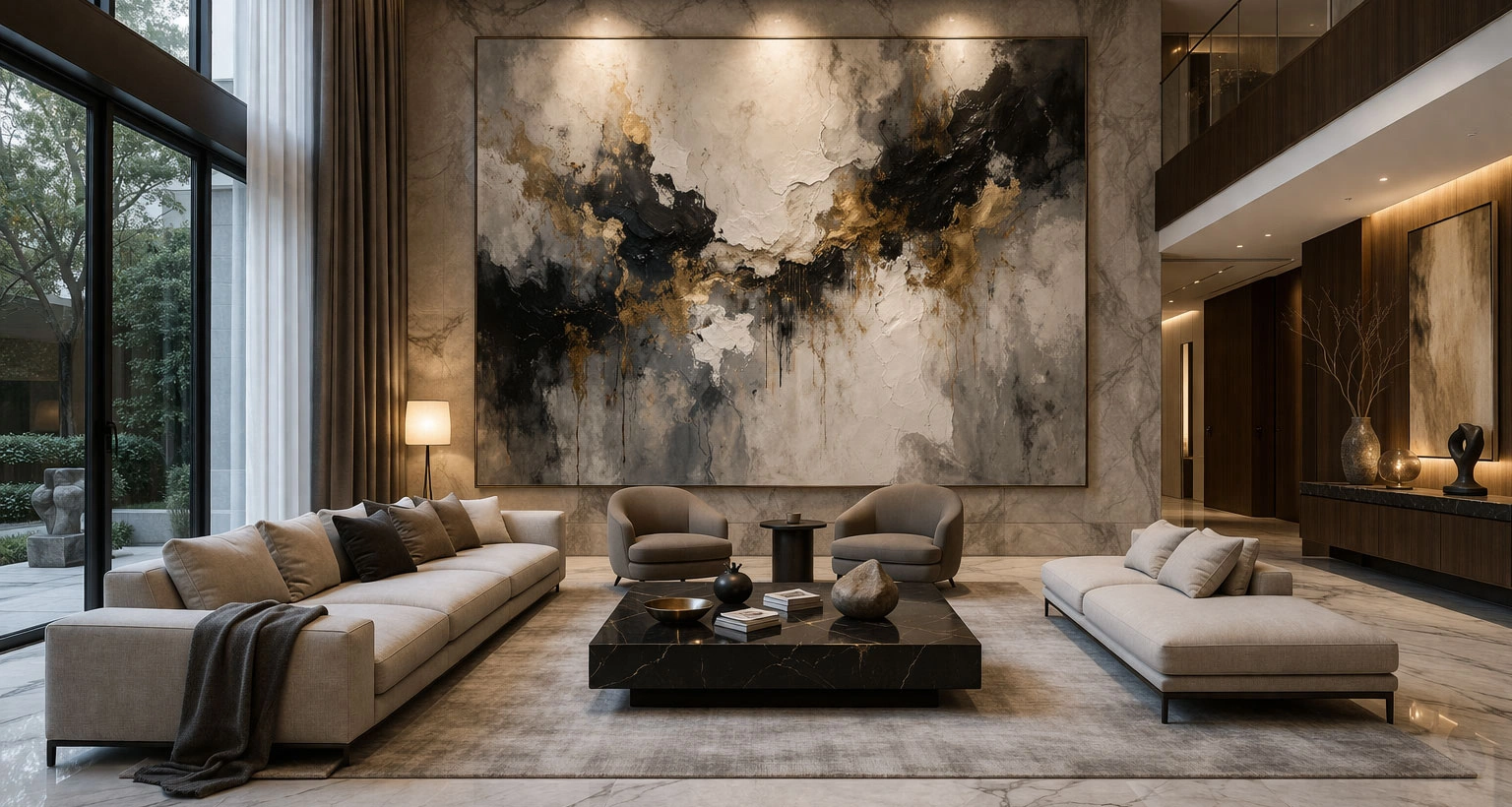

After reading the interior style of the room, the next step in choosing art for your home is checking the scale of the main furniture. Art should not only match the colors or mood of a space. It should also sit correctly with the size, height, and visual weight of the furniture around it.
In a living room, the sofa is usually the strongest guide. A wide sofa needs artwork with enough presence, otherwise the wall can feel empty even if the piece is beautiful. A smaller sofa may work better with one modest artwork or a balanced pair of pieces. In a bedroom, the bed and headboard create the main visual frame. A tall or detailed headboard often needs calmer artwork, while a lower bed can allow for a wider or more expressive piece above it.
This becomes even more important when a room includes custom furniture Dubai homeowners often choose for villas, apartments, and tailored interiors. A made-to-measure sofa, console, cabinet, or bed already has a specific proportion. The artwork should respect that proportion instead of looking randomly added later.
The same idea applies to entrances and hallways. A console table or cabinet can support wall art, sculpture, or decorative objects, but the size must feel balanced. A small piece above a large console can disappear. A heavy artwork above a slim cabinet can feel visually unstable. Good art placement creates a clear relationship between the artwork and the furniture.
A strong artwork should not be chosen as a separate object. It should respond to the room type, furniture anchor, wall proportion, material mood, and daily light. Use this guide to see how the same artwork decision changes from a living room to a bedroom, dining area, or entrance.
In a living room, the sofa usually controls the visual weight of the wall. The artwork should feel strong enough to belong above or near it, but not so loud that it fights with the seating, rug, coffee table, or decorative objects.
In a bedroom, the bed and headboard shape the artwork decision. The piece should support rest, not create visual noise. Softer movement, warmer texture, or a controlled color palette usually feels more natural above a bed.
Dining areas can carry more structure and character because people experience the artwork while sitting, talking, and sharing meals. The right piece should connect with the table, chairs, lighting, and sideboard.
In an entrance or hallway, art is often seen quickly. It should create a clear mood without needing too much explanation. A console, cabinet, mirror, sculpture, or wall piece can help define the first feeling of the home.
Choose the size after checking the furniture below or beside the artwork.
Use color to connect the art with the room, not to copy everything exactly.
Wood, marble, brass, glass, and fabric should influence the artwork mood.
The final piece should still feel right after the first impression fades.
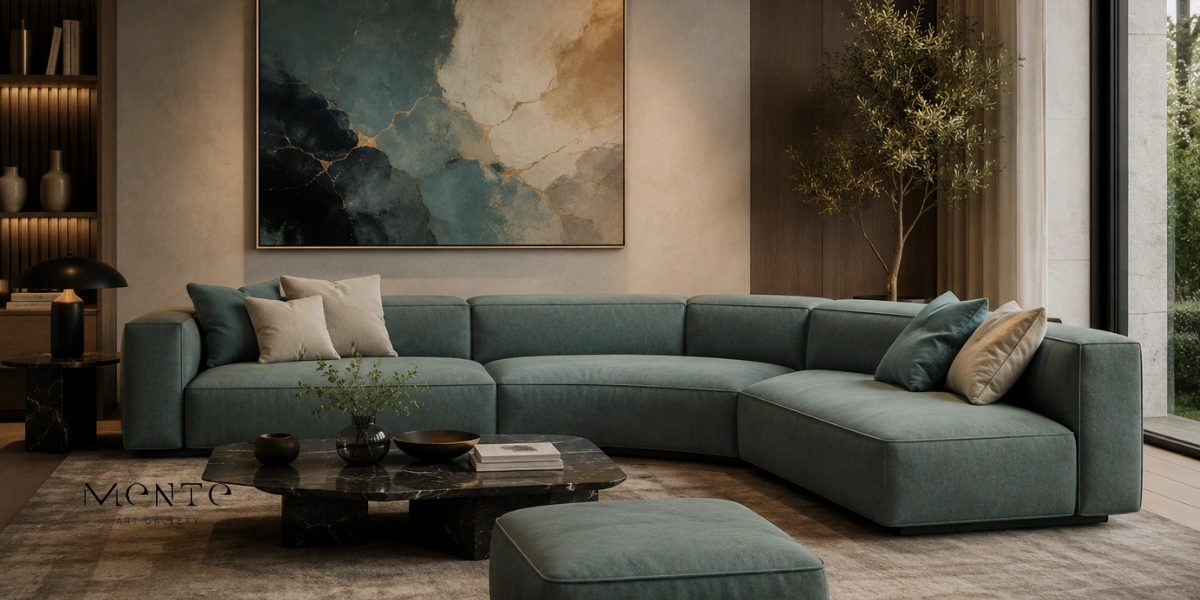
After checking size, furniture scale, and room proportion, the next part of choosing art for your home is thinking about daily experience. Art is not only something you place on a wall to complete a room. It becomes part of what you see every morning, what guests notice when they enter, and what shapes the feeling of the space when you sit, eat, read, or relax.
This is why the right artwork should feel good in real life, not only in a photo. A strong piece may look impressive online, but if it feels too loud above your sofa or too distracting in a bedroom, it may not support the way you actually use the room. A calmer artwork may be better for a resting space, while a bolder piece can work beautifully in a living room, entrance, or dining area where you want more presence.
At Mente Art Gallery, this is an important part of choosing artwork for an interior. The piece should not only be visually attractive by itself; it should also work with the room, the furniture, the light, and the feeling you want to create every day.
Lighting also changes the experience. Natural daylight can make colors feel softer, while evening lighting may make textures, shadows, and darker tones more noticeable. Before choosing a final piece, imagine how it will look at different times of day and from the places where people usually stand or sit. The best choice is not always the most expensive or dramatic artwork. It is the piece that makes the room feel more personal, more balanced, and easier to enjoy every day.
When choosing art for your home, color temperature helps you match artwork with furniture materials. Warm colors usually work better with wood, leather, brass, and ceramic, while cool colors often suit marble, glass, chrome, and modern metal finishes.
| Color Tone | Warm / Cool | Best Matching Materials |
|---|---|---|
| Beige, Cream, Sand | Warm | natural wood, linen, travertine, ceramic |
| Brown, Terracotta, Rust | Warm | dark wood, leather, bronze, clay |
| Gold, Champagne, Brass | Warm | marble, velvet, glass, polished wood |
| Blue, Navy, Gray | Cool | chrome, silver metal, glass, marble |
| Black & White | Neutral | metal, marble, lacquered wood, glass |
| Emerald, Teal, Deep Green | Cool Rich | velvet, brass, dark wood, marble |
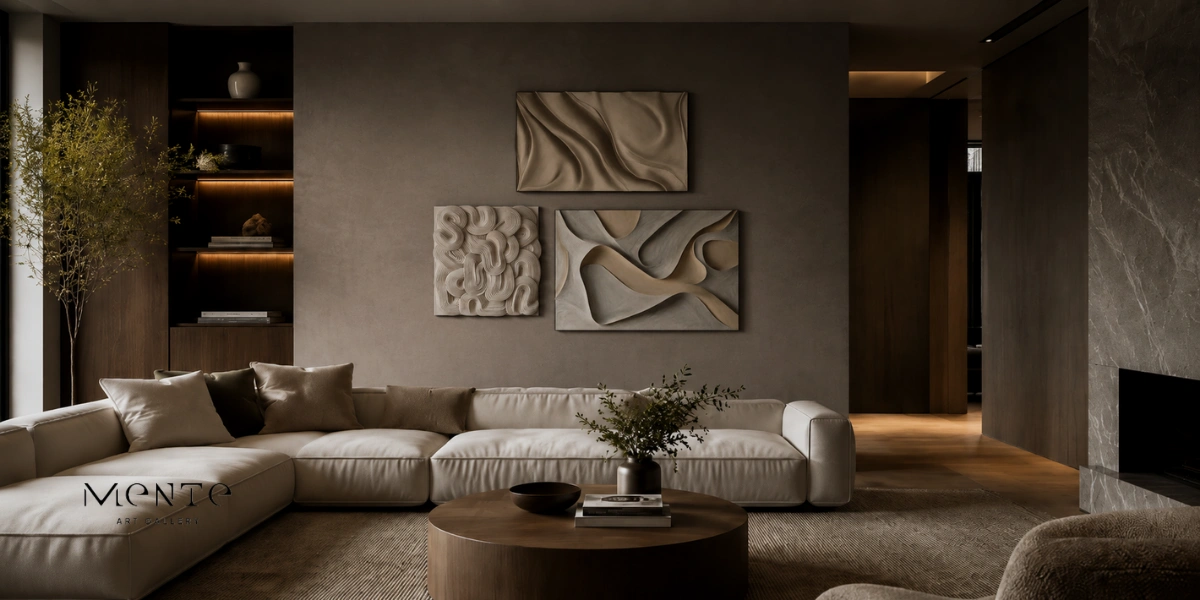
Choosing art for your home should end with a decision that feels honest to the room, not forced by trends or decorative rules. The right piece should work with your interior style, main furniture, wall size, color palette, materials, lighting, and the way you actually live in the space.
Before making the final choice, look at the room one more time as a whole. If you are comparing paintings, sculptures, textured pieces, or 3D wall art paintings for sale in Dubai, do not choose only the piece that looks most dramatic. Choose the one that makes the furniture feel more balanced, gives the wall a clear purpose, and improves the feeling of the room.
Good art does not need to overpower a home. It should add character, create balance, and make the interior feel more personal, complete, and carefully considered.
Start by looking at the largest furniture piece in the room, such as the sofa, bed, console, cabinet, or dining table. If the furniture already has strong color, pattern, texture, or shape, choose artwork that gives the room more balance. If the space feels too plain, a stronger artwork can add character without making the room feel overloaded.
Artwork does not need to match every color in the room exactly. A better approach is to connect the artwork with the space through mood, scale, material, or one shared color tone. For example, a painting can repeat a soft shade from the sofa, contrast with a neutral wall, or balance the shape of a bed, console, or cabinet without looking too matched.
The artwork should feel visually connected to the furniture below it. A very small piece above a wide sofa or bed can look lost, while a very large piece above a slim console can feel heavy. In many interiors, wider horizontal artwork, a balanced pair of pieces, or one strong central artwork works best above large furniture.
Abstract art can work very well in modern interiors because it adds movement, color, and personality without making the room feel too literal. The important part is choosing a piece that suits the materials already used in the space. Marble, metal, glass, wood, linen, leather, and velvet can all change which type of abstract artwork feels right.
Look beyond the first impression. Think about how the artwork will feel in natural light, evening light, and during daily use of the room. A good piece should not only look impressive in a photo. It should make the room feel more balanced, personal, comfortable, and complete over time.
Also Read : How to Care for and Clean a Handmade Rug?
Subscribe now to keep reading and get access to the full archive.
Shipping charges are customized for each order, depending on the destination and the size of the items. After you place your order, our team will carefully review the details and contact you to provide the exact shipping cost, as well as the expected delivery time. We aim to make the shipping process as clear and simple as possible, so you’ll always know what to expect.